Your Honda is designed to deliver a smooth, stable, and controlled driving experience.
But if you’ve recently noticed:
Steering pulling to one side
Vibrations at higher speeds
Uneven tire wear
Reduced fuel average
The problem may not be your engine.
It’s often something much simpler — wheel alignment and balancing.
These two services may sound basic, but they directly affect comfort, safety, and long-term maintenance costs.
What Is Wheel Alignment?
Wheel alignment refers to adjusting the angles of your wheels so they meet the road exactly as Honda’s engineers intended.
Proper alignment ensures:
Straight driving without pulling
Even tire wear
Stable steering control
Improved fuel efficiency
Even small impacts from potholes, speed breakers, or rough Lahore roads can disturb alignment.
What Is Wheel Balancing?
Wheel balancing ensures that the tire and wheel assembly rotate evenly without vibration.
When balancing is incorrect, you may feel:
Steering wheel vibration
Shaking at speeds above 80–100 km/h
Uneven tire wear
Reduced driving comfort
Balancing is especially important after installing new tires or hitting a hard bump.
Why Honda Cars Need Precise Alignment
Honda vehicles are engineered with precise suspension geometry.
Even a small misalignment can affect:
Suspension components
Steering accuracy
Tire lifespan
Fuel consumption
Overall ride comfort
Modern Honda models rely on exact measurements — guesswork doesn’t work.
Signs Your Honda Needs Alignment or Balancing
Watch for these early warning signs:
Car drifting left or right
Steering wheel not centered
Vibration in steering at highway speeds
Tires wearing unevenly
Sudden drop in fuel average
Steering feels unstable
Ignoring these signs can lead to suspension damage and higher repair bills.
How Poor Alignment Affects Fuel Average
When wheels are misaligned, tires create additional rolling resistance.
This means:
- The engine works harder
- More fuel is consumed
- Mileage decreases
- Even slight alignment issues can reduce fuel efficiency by 5–10%.
How Often Should You Get It Checked?
For Honda owners in Pakistan:
Check alignment every 5,000–10,000 km
Always check after hitting a major pothole
Inspect when installing new tires
Get checked if steering feels different
Regular checks prevent larger mechanical issues later.
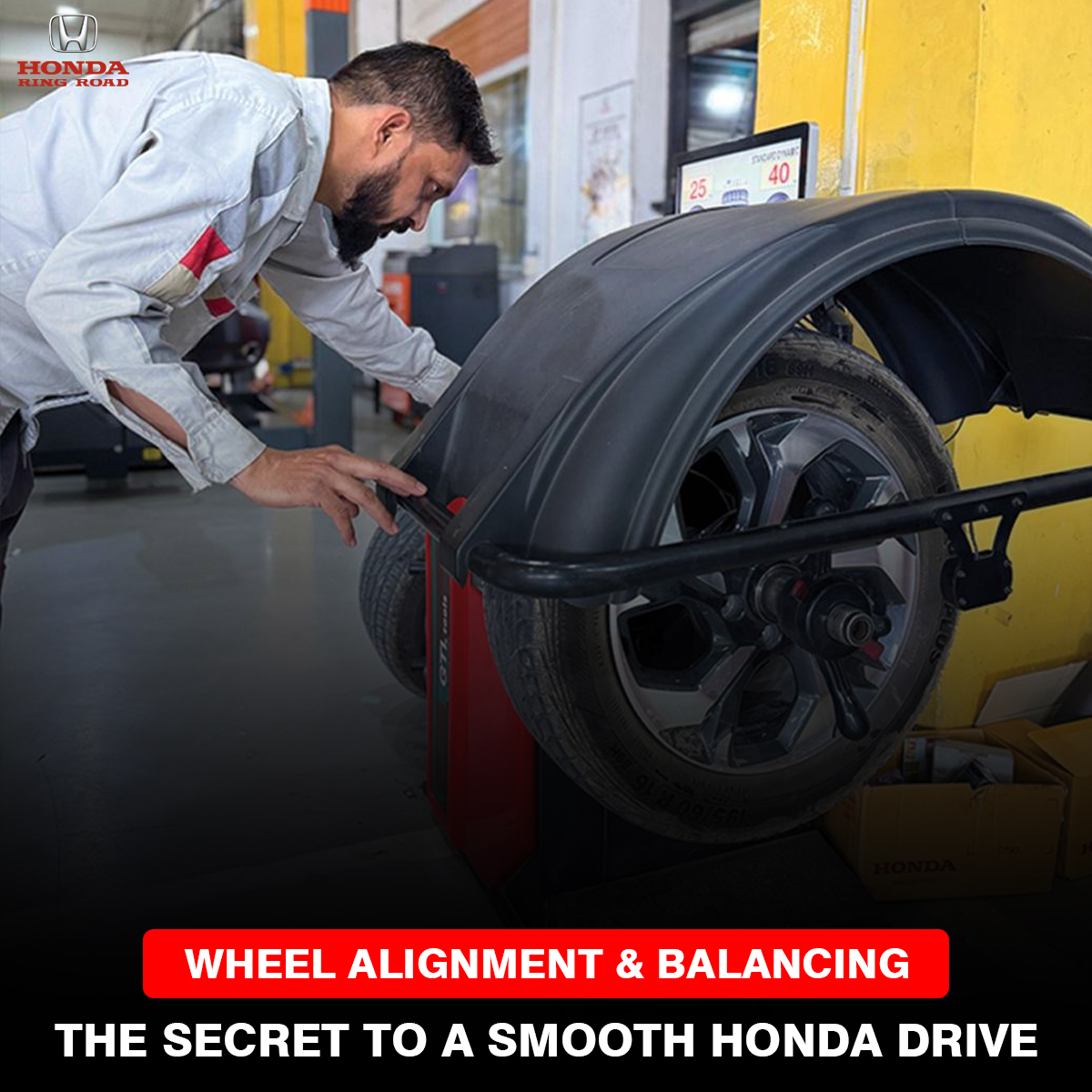
Why Professional Equipment Matters
Wheel alignment is a precision task.
It involves measuring angles such as:
Camber
Toe
Caster
Accurate computerized alignment systems are required to restore factory settings.
Improper roadside alignment setups often lack proper calibration, leading to repeated problems.
Long-Term Benefits of Proper Alignment & Balancing
When done correctly, you will notice:
- Smoother drive
- Better highway stability
- Improved fuel efficiency
- Extended tire life
- Reduced suspension wear
- Safer braking performance
- It’s one of the most cost-effective preventive services for your Honda.
Final Thoughts
Wheel alignment and balancing are often overlooked — until discomfort begins.
If your Honda feels slightly off, vibrates, or pulls to one side, don’t ignore it.
Early correction protects your tires, suspension, and fuel efficiency.
A smooth Honda drive isn’t just about engine power.
It’s about precision in every moving part.