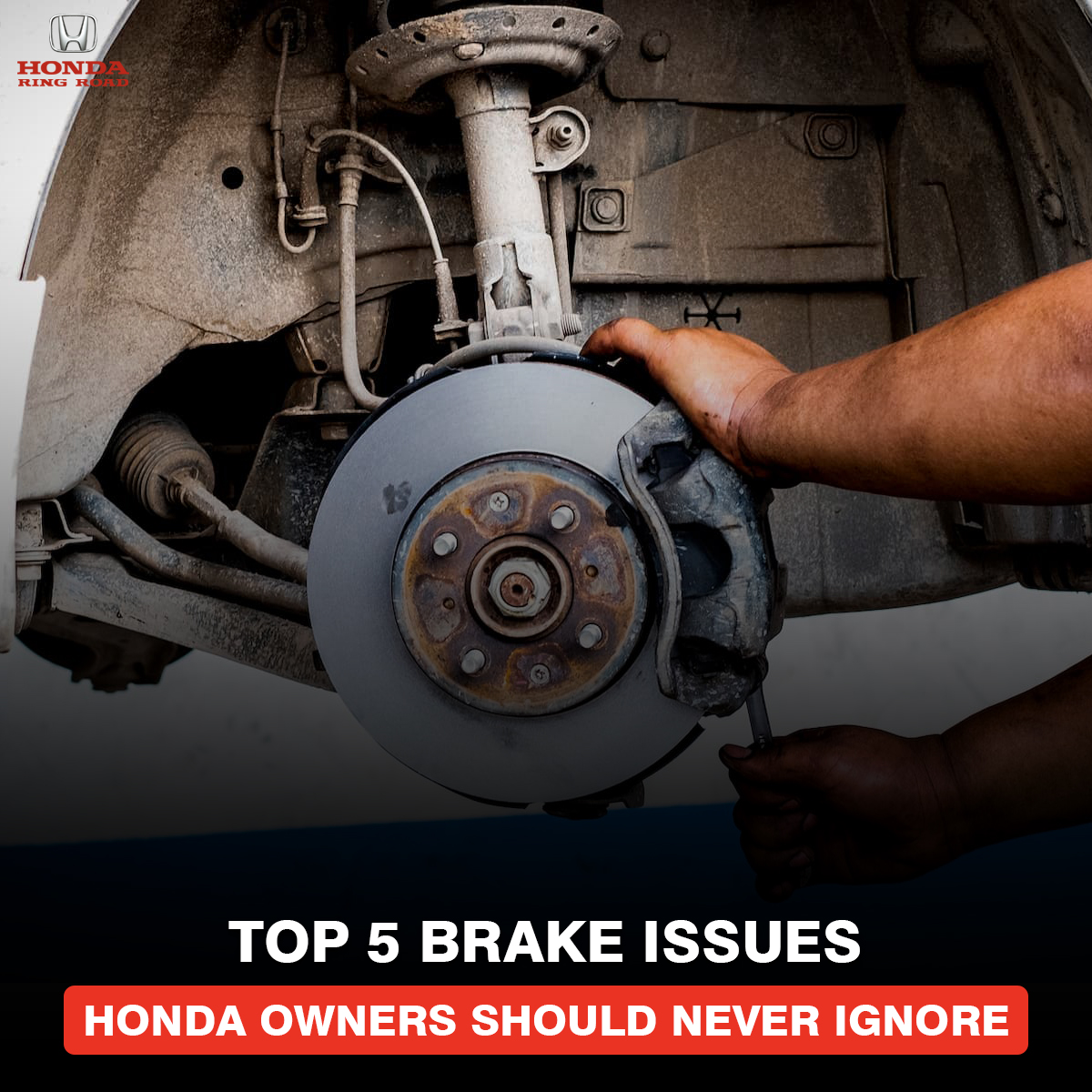
Your Honda’s braking system is one of the most important safety features in the entire vehicle. Whether you drive a Honda City, Civic, BR-V, or any other model, the brakes are responsible for keeping you, your passengers, and others on the road safe.
However, many drivers unknowingly ignore early warning signs of brake problems. What starts as a minor issue can quickly become a serious safety risk.
Understanding the most common brake problems can help Honda owners identify issues early and avoid costly repairs or dangerous driving situations.
Squeaking or Screeching Brake Noise
One of the earliest signs of brake trouble is a high-pitched squeaking sound when pressing the brake pedal.
This usually happens when:
- Brake pads are wearing thin
- Dust or debris builds up between the pad and rotor
- Low-quality brake pads are installed
Most brake pads include a wear indicator that produces this sound when they need replacement.
Ignoring this noise can cause the brake pads to wear down completely, eventually damaging the brake discs.
Vibrations While Braking
If you feel vibrations in the steering wheel or brake pedal while slowing down, it often indicates a problem with the brake discs.
Common causes include:
- Warped brake rotors
- Uneven brake pad wear
- Overheated braking components
When brake rotors become uneven, the pads cannot grip the surface smoothly. This reduces braking efficiency and creates vibration during stopping.
Soft or Spongy Brake Pedal
A brake pedal that feels soft or sinks too easily when pressed is a serious warning sign.
Possible reasons include:
- Air in the brake lines
- Brake fluid leakage
- Worn master cylinder
- Moisture contamination in brake fluid
This problem reduces the pressure applied to the braking system and increases stopping distance.
Immediate inspection is recommended if the brake pedal does not feel firm.
Grinding Sound When Braking
A grinding sound is often a sign that brake pads have completely worn out.
At this stage, the metal backing plate of the brake pad starts rubbing directly against the brake disc.
This causes:
- Severe rotor damage
- Reduced braking ability
- Extremely expensive repairs
- Once grinding begins, the braking system needs urgent attention.
Car Pulling to One Side While Braking
If your Honda pulls to the left or right when you apply the brakes, it may indicate:
- Uneven brake pad wear
- A stuck brake caliper
- Brake fluid imbalance
- Suspension alignment issues
This problem affects braking stability and can make the car harder to control, especially during emergency stops.
Why Early Brake Inspection Matters
Many brake problems begin gradually and worsen over time. Early inspection can prevent small issues from turning into major repairs.
Routine brake servicing typically includes:
- Brake pad inspection
- Brake disc condition check
- Brake fluid level and quality testing
- Caliper and brake line examination
These checks help ensure that the braking system continues to operate safely and efficiently.
How to Protect Your Honda’s Braking System?
Maintaining your brakes does not require complicated steps. A few simple habits can significantly extend brake life:
- Replace brake pads at recommended intervals
- Avoid aggressive braking when possible
- Keep brake fluid clean and at proper levels
- Inspect brakes regularly during routine service
- Consistent maintenance helps preserve braking performance and improves overall safety.
Final Thoughts
Brake issues are not something Honda owners should delay addressing. Even small warning signs like noise or vibration can indicate developing problems in the braking system.
By paying attention to these signals and scheduling timely inspections, drivers can ensure their Honda remains safe, reliable, and responsive on the road.