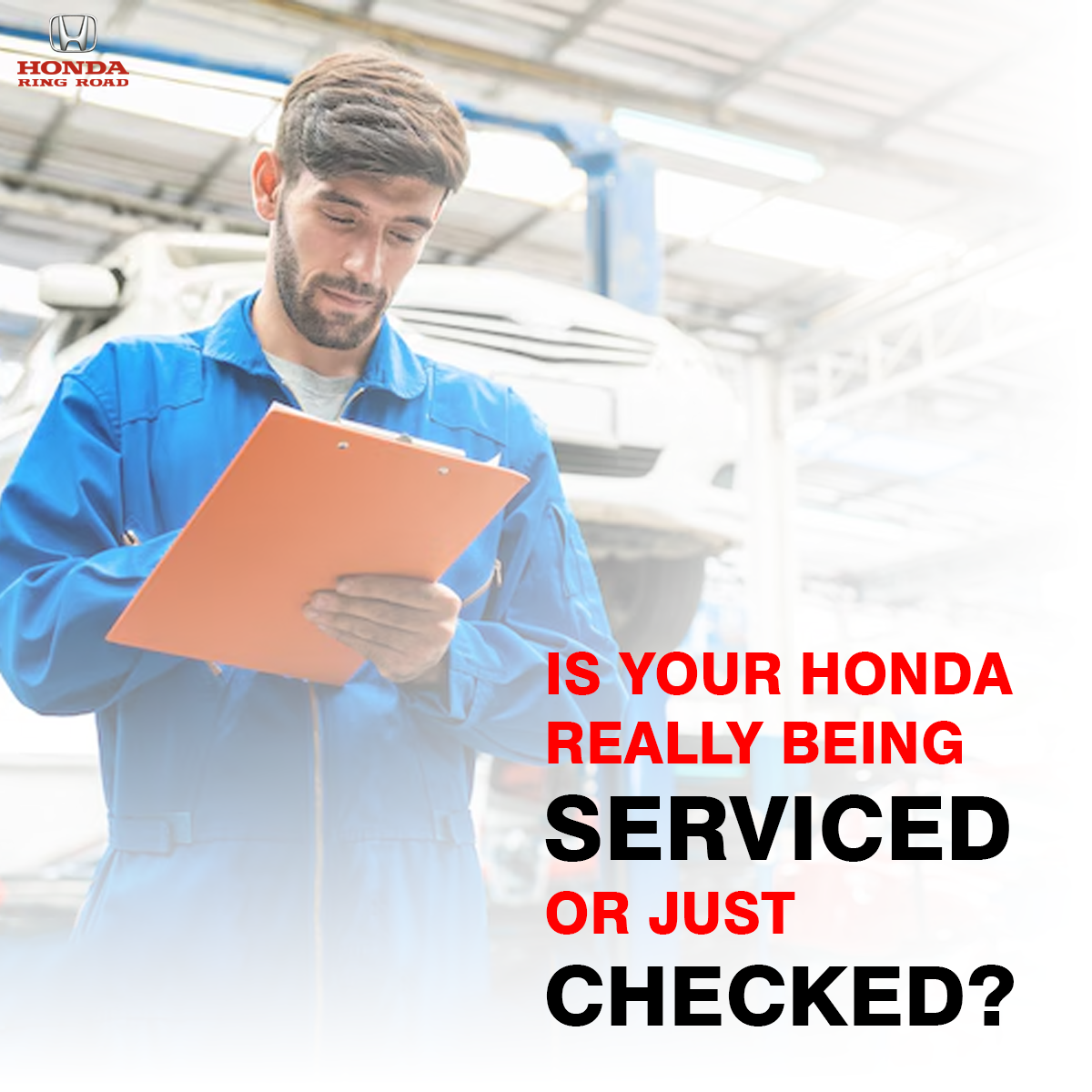
You take your Honda to a workshop, wait for an hour or two, and the technician tells you, “Everything is fine. We checked the car.”
It sounds reassuring. You pay the bill, drive away, and assume your car has been properly serviced.
But here’s a question most Honda owners rarely ask:
Was your car actually serviced, or was it simply inspected and returned?
The difference between a quick check and a proper service is significant — and it can determine how reliable, efficient, and long-lasting your Honda will be.
The Difference Between Checking and Servicing
Many workshops perform only basic inspections instead of full maintenance.
A Basic Check Usually Includes
Visual inspection of the engine bay
Quick look at fluids
Basic tire pressure check
A short road tests
While these checks are helpful, they do not replace actual servicing.
Proper Honda Servicing Includes
Engine oil and filter replacement
Air and cabin filter inspection or replacement
Brake system inspection and cleaning
Diagnostic scanning of electronic systems
Fluid level checks and top-ups
Battery and electrical system testing
Servicing focuses on preventing problems, not just identifying them.
Why “Quick Checks” Can Be Misleading
A quick check often gives drivers a false sense of security.
A technician may say everything looks fine, but without deeper inspection, important issues may remain unnoticed.
For example:
Dirty filters may restrict airflow
Brake components may already be wearing unevenly
Engine sensors may show early warning codes
Oil quality may already be degrading
Without proper servicing, these issues slowly develop into larger problems.
Modern Honda Cars Need More Than Visual Inspection
Today’s Honda vehicles rely heavily on electronics and sensors.
Many problems cannot be detected by simply opening the hood. They require diagnostic equipment that reads information from the car’s computer systems.
These tools can identify issues related to:
Engine performance
Fuel injection systems
Emissions control
Transmission operation
Without these diagnostics, some problems remain hidden until they become serious.
The Cost of Skipping Proper Service
Skipping proper servicing may save time today, but it can increase maintenance costs later.
Common consequences include:
Reduced fuel efficiency
Premature engine wear
Frequent breakdowns
Expensive repairs
Preventive maintenance is always more affordable than fixing major mechanical failures.
How to Know Your Honda Is Actually Being Serviced
Honda owners can protect themselves by asking a few simple questions during service visits.
Make sure your service includes:
A clear job card describing the work being performed
Replacement of recommended fluids and filters
A diagnostic scan report if warning lights appear
Proper documentation of the service
A transparent service process ensures you know exactly what was done to your vehicle.
Why Proper Servicing Matters
A well-serviced Honda delivers the performance it was designed for:
Smooth engine operation
Better fuel economy
Longer component lifespan
Higher resale value
Most importantly, proper servicing keeps your car safe and reliable for daily driving.
Final Thoughts
When it comes to maintaining your Honda, there’s a big difference between a quick check and a proper service.
A visual inspection might confirm that nothing is obviously wrong today, but real servicing protects your car from problems tomorrow.
The smartest Honda owners don’t just ask if their car was checked —
they make sure it was truly serviced.