You fix one issue.
A week later, another problem appears.
Then something else stops working.
It starts to feel like your Honda has become unreliable overnight.
But here’s the uncomfortable truth:
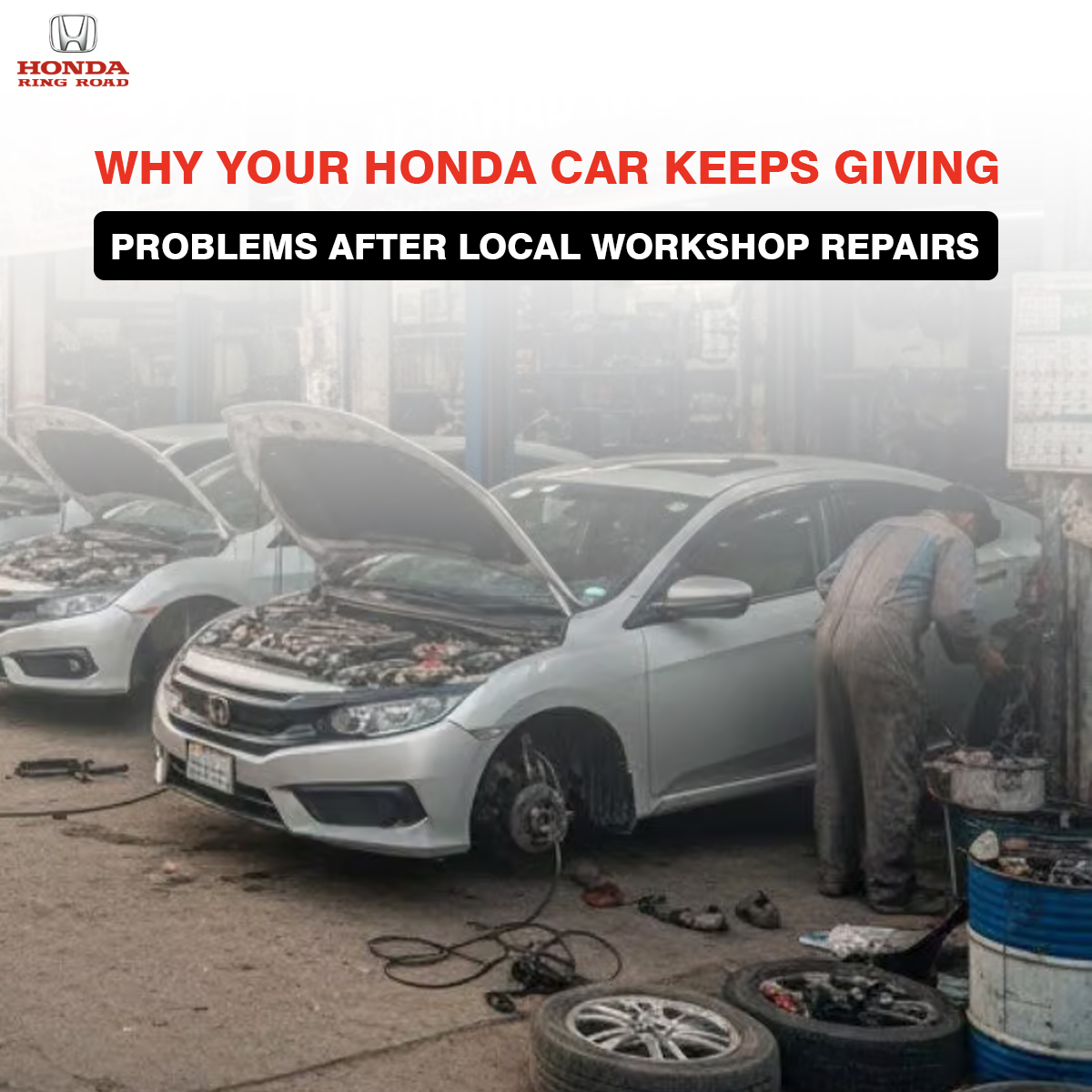
In many cases, the car isn’t the real problem — the repair quality is.
Let’s understand why Hondas often continue giving problems after local workshop repairs.
- Guesswork Instead of Proper Diagnosis
Modern Honda vehicles are highly computerized.
Engine, transmission, braking, and electrical systems are all connected through sensors and the ECU (Engine Control Unit).
Local workshops often:
Use generic scanners
Skip full system diagnostics
Replace parts based on assumptions
When the root cause isn’t identified, the real issue remains — and keeps returning. - Use of Non-Genuine or Low-Quality Parts
Counterfeit and low-grade spare parts are common in the local market.
These parts may:
Look similar to original parts
Cost significantly less
Fail much faster
Affect surrounding components
For example:
A fake sensor can confuse the ECU
Low-quality brake pads can damage discs
Cheap suspension parts can wear unevenly
The result? More visits to the workshop. - Incomplete Repairs
Sometimes workshops fix the visible symptom — not the underlying problem.
For example:
Replacing a leaking hose without checking the full cooling system
Fixing brake pads but ignoring worn discs
Changing spark plugs without checking ignition coils
This temporary fixing leads to recurring problems. - Lack of Proper Tools and Equipment
Honda cars require precise tools and calibration equipment.
Without proper tools:
Bolts may be over-tightened or under-tightened
Wheel alignment may be inaccurate
Electrical systems may not be calibrated correctly
Small technical errors create bigger mechanical problems over time. - No Standardized Repair Procedures
Authorized Honda service centers follow manufacturer-approved procedures.
Local workshops often rely on:
Experience
Trial and error
Shortcuts
While experience is valuable, modern Honda vehicles require standardized repair processes to ensure long-term reliability. - Electrical System Mismanagement
Modern Hondas have complex electrical systems.
Improper wiring, battery installation, or sensor replacement can lead to:
Repeated warning lights
Starting problems
ECU errors
Battery drainage
Electrical mistakes are among the most common causes of recurring issues. - Warranty Risks
If your Honda is still under warranty, unauthorized repairs can void coverage.
This means:
You lose manufacturer protection
Future repairs become fully your responsibility
Resale value decreases
Many owners realize this only after facing a major repair bill. - No Proper Service Records
Local workshops usually do not maintain structured service history.
Without records:
Diagnosing recurring issues becomes difficult
Buyers lose trust when selling
Maintenance tracking becomes inconsistent
A documented service history protects your car’s value.
Why Proper Honda Servicing Makes a Difference?
When repairs are done at an authorized Honda facility:
Genuine parts are used
Advanced diagnostics identify root causes
Certified technicians handle repairs
Manufacturer-approved procedures are followed
Service history is recorded
This reduces repeat visits and ensures long-term reliability.
The Real Cost of Repeated Repairs
At first, local repairs may look cheaper.
But repeated visits, incorrect fixes, and part failures often result in:
- Higher total maintenance cost
- Increased downtime
- Frustration
- Reduced vehicle lifespan
- Cheap repairs become expensive when repeated.
Final Thoughts
If your Honda keeps giving problems after local workshop visits, it’s rarely coincidence.
Recurring issues usually mean:
- The root cause wasn’t fixed.
- The wrong parts were installed.
- The repair process lacked precision.
Your Honda is engineered with precision. It needs professional care, accurate diagnosis, and genuine components.
Fixing the problem correctly once is always cheaper than fixing it multiple times.