
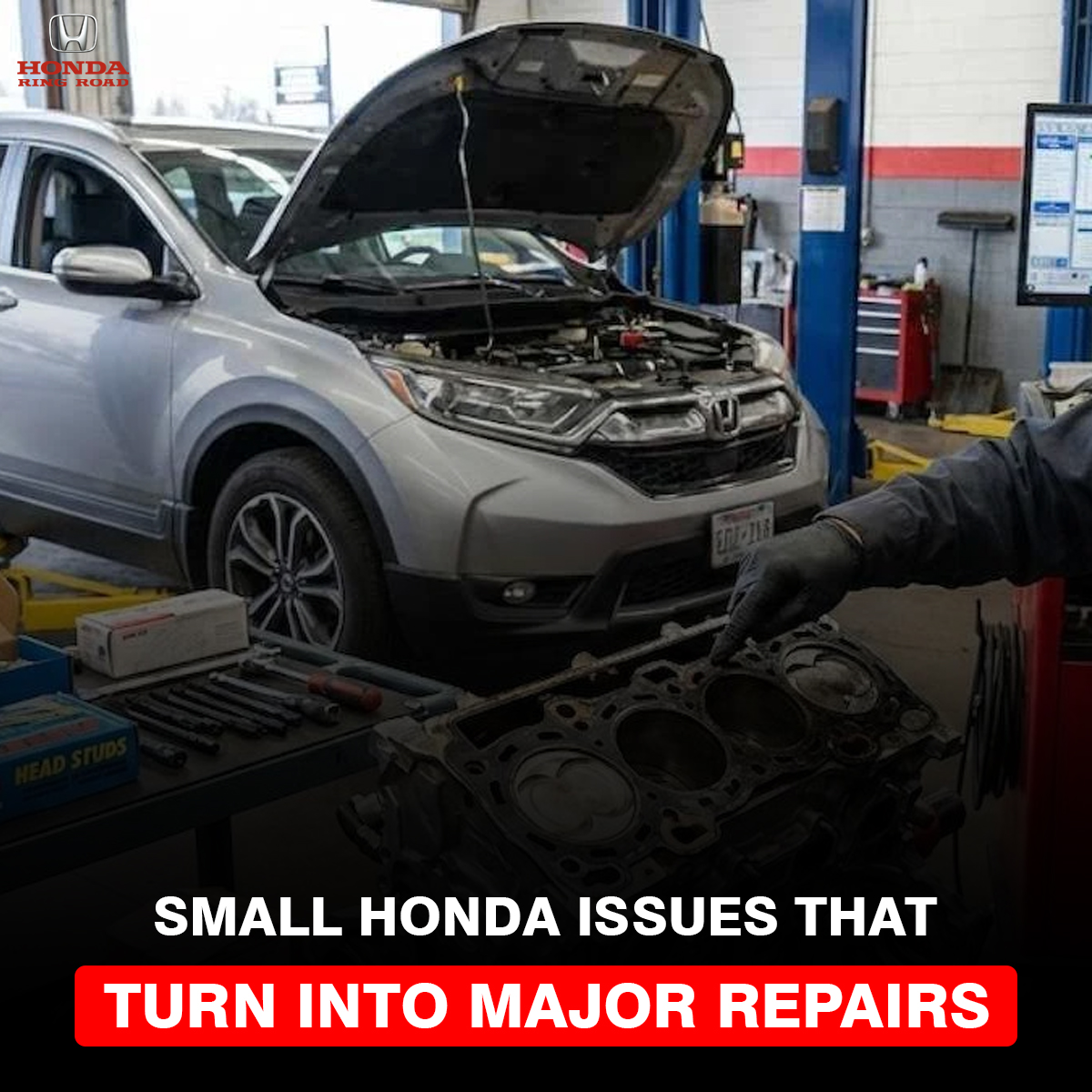
Most major Honda repairs don’t start big.
They start small.
A minor sound.
A small leak.
A warning light you ignore for a few days.
Then suddenly, you’re facing a repair bill that feels completely unexpected.
The truth is simple: small issues become expensive when they’re ignored.
Let’s look at the common “minor” Honda problems that quietly grow into serious repairs.
- Delayed Oil Change
It’s easy to postpone an oil change by a few thousand kilometers.
But old engine oil:
Loses lubrication quality
Causes internal friction
Increases engine temperature
Accelerates wear on moving parts
Over time, this can lead to serious engine damage — one of the most expensive repairs any Honda owner can face. - Ignoring a Check Engine Light
Many drivers continue using their car even when the check engine light appears.
Sometimes it’s minor.
But sometimes it indicates:
Sensor failure
Misfiring cylinders
Fuel system issues
Emission control problems
Without proper diagnostics, a small sensor issue can damage catalytic converters or engine components. - Minor Coolant Leak
A small coolant leak may not seem urgent.
But low coolant levels cause:
Engine overheating
Head gasket failure
Warped engine components
Overheating once can permanently damage your engine. - Brake Noise or Slight Vibration
That slight squeaking or soft vibration while braking may feel harmless.
But worn brake pads can damage:
Brake discs
Calipers
Brake fluid system
Replacing brake pads is affordable.
Replacing the full braking system is not. - Tire Misalignment
Uneven steering or slight pulling may feel like a small issue.
But poor alignment causes:
Uneven tire wear
Suspension strain
Reduced fuel efficiency
Steering component damage
Ignoring alignment can double your tire replacement cost. - Battery Warning Signs
Slow engine start or dim lights are early warning signals.
If ignored, a weak battery can:
Damage the alternator
Affect electronic systems
Leave you stranded unexpectedly
Electrical problems often multiply if not addressed early. - Transmission Hesitation
If your Honda hesitates while shifting or feels jerky, don’t ignore it.
Small transmission issues can escalate into:
Major internal damage
Complete transmission failure
Extremely high repair costs
Early fluid replacement and diagnostics prevent this. - Suspension Noises
Clunking or knocking sounds from suspension may seem harmless.
But worn suspension parts affect:
Steering stability
Tire wear
Braking performance
Overall safety
Replacing a single worn component is manageable.
Ignoring it can damage multiple parts. - Poor Fuel Average
If your Honda’s mileage drops gradually, something is wrong.
Possible causes:
Dirty air filters
Faulty spark plugs
Clogged injectors
Sensor malfunction
Ignoring fuel inefficiency can stress the engine long-term.
Why Small Issues Grow So Fast
Modern Honda vehicles are highly interconnected systems.
One small faulty part often affects multiple components.
That’s why early detection is critical.
Professional diagnostics at an authorized Honda facility ensure:
Root cause identification
Accurate repair
Genuine parts replacement
Long-term reliability
The Smart Honda Owner Approach
Smart owners don’t wait for a breakdown.
They:
Follow service schedules
Address warning lights immediately
Use genuine parts
Get regular inspections
Preventive maintenance always costs less than emergency repairs.
Final Thoughts
Small Honda issues rarely stay small.
What feels minor today can become a major expense tomorrow.
The difference between a small bill and a large one is usually timing.
Take early signs seriously.
Protect your engine.
Protect your safety.
Protect your investment.
Because when it comes to car repairs, delay is the most expensive decision.
